

Walking around San Francisco, I keep noticing Square at the counter. I used to admire that company it from my parents house. Years later, I ended up working with one of the people who founded it. Now I’m here, seeing this familiar little object everywhere again and made me reflect on my own journey in the design world and how much is changing over the last couple of years.
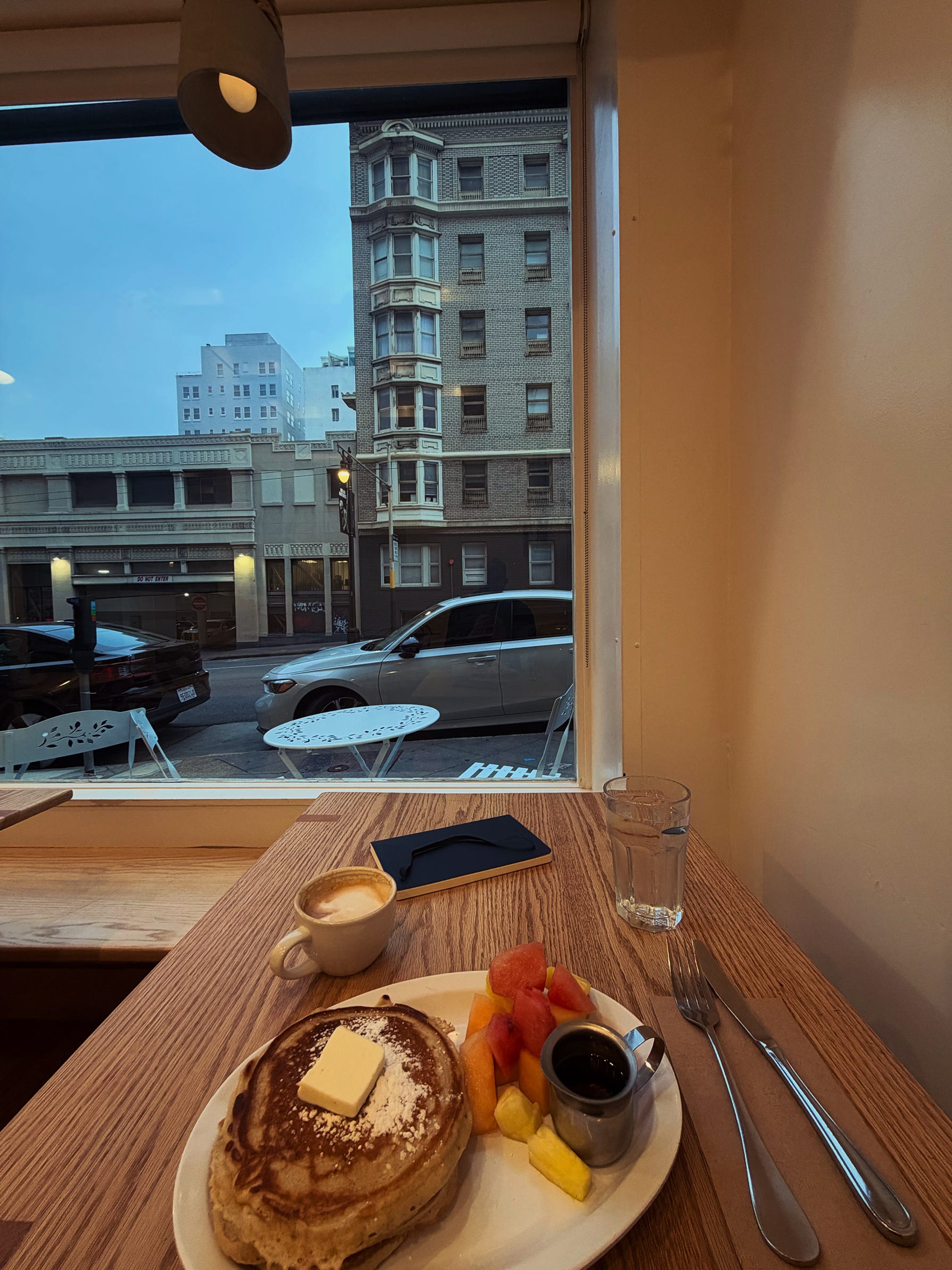
What surprised me was how strongly it made me want to build something even bigger. Having more freedom and space in my life seems to have extended my time horizon. I love what I’m building, but something about how I relate to it has changed. There’s a greater sense of peace, and with that comes a willingness to dedicate myself to something difficult for a very long time.
I keep wondering what someone else would choose.
We talk about AI giving people’s time back. I’ve used that phrase myself. But imagine a team finds a way to do on Tuesday what used to take until Friday. I’m interested in what happens on Wednesday morning. Does someone bring in the idea they’ve wanted to try for years? Does the next deadline move up? Does a parent get to pick up their kid? And who gets to make that call?
That last question changes how I think about intelligence. A machine could become extraordinarily good at carrying out a decision while the person sitting in front of it has very little say in what the decision is. Equally, someone who has understood a problem for twenty years might finally have the means to do something about it.
Through my work, I find myself approaching this from different directions: how people discover what they are capable of, and how organizations change as the means of doing work evolve. Increasingly, I wonder whether these are two sides of the same question.
For much of our lives, what we want is shaped by what we believe is possible. We choose careers, develop skills and make compromises within the constraints of the world we grow up in. What happens when some of those constraints disappear? We might discover ambitions we never allowed ourselves to have. We might also discover that some of the things we spent years pursuing were simply a means to something else.
What excites me about this period is that each of us has an opportunity to revisit some of the questions we may have answered too early in life. What would you genuinely like to spend the next ten years exploring? What problems do you care enough about to dedicate yourself to? What role do you want work to play in your life? And how do you want to relate to a world that is changing so fundamentally?
Perhaps the most interesting thing about intelligence becoming abundant is not the answers it will give us, but the questions we can finally afford to ask ourselves.